Returning to the Inner Current
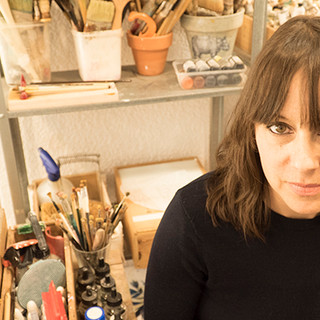

Florentine Muse 
Florentine Muse 
Florentine Muse
There are periods in life when, almost without realizing it, we slowly move away from the things that make us feel most like ourselves. Not because we have stopped loving them, and not because the passion has disappeared, but simply because life takes over.
Other endeavors require our attention, responsibilities accumulate, our energy moves in different directions, and suddenly the intimate connection we once had with our creative practice becomes quieter.
Perhaps this distance is necessary sometimes.
There is something incredibly subtle about our inner drive—the invisible motor that makes us want to create, explore, imagine, and transform ideas into something tangible.
When it is present, we rarely question it. We simply follow it. But it is precisely because it can feel so natural that we should never take it for granted.
There are moments when we are deeply connected with ourselves, when we are present enough to listen to that inner voice without forcing anything. In those moments, creation seems to arrive almost effortlessly.
Ideas appear unexpectedly, one leading naturally to another. Time becomes irrelevant. We stop thinking about what we should be doing and simply become absorbed in what is happening in front of us.
It is one of the greatest blessings of a creative life: that extraordinary state in which you are working, but somehow it does not feel like work. Something seems to flow through you rather than come entirely from you.
And then life interrupts.
Summer, in particular, has its own rhythm. The heat slows everything down. Our bodies ask for rest, our minds become softer, and the energy we normally dedicate to creating sometimes needs to be directed toward simply being. There are journeys, people, obligations, distractions, and days when the high temperatures make doing almost anything feel exhausting.
Perhaps we need to respect those seasons too.
Nature never produces endlessly. There is a time for flowering and a time for retreat. A time for expansion and a time for gathering energy again.
Creativity has its own seasons as well, even when we would prefer it to remain permanently in bloom.
The beautiful part comes when we begin returning.
Slowly, almost timidly at first, we step back into the studio. We touch our materials again. We rearrange things. We look at unfinished work with different eyes. We begin experimenting without knowing exactly where it will lead.
And suddenly, something familiar awakens.
We remember how much we missed this.
We remember the particular happiness of being alone with our work, surrounded by brushes, papers, pigments, canvases, books, unfinished ideas, mistakes, possibilities, and all the beautiful chaos of creation.
We begin to feel that quiet excitement again. One idea opens the door to another, and slowly the creative current starts moving.
Then comes that wonderful sensation: everything is exactly where it should be.
Not because everything in life is perfect, but because for a moment we are completely present. We are connected again with that deeper part of ourselves, the place beyond noise, expectations, schedules, and external demands.
This is why returning to our practice after some time away can be so powerful.
Distance gives us perspective. It reminds us that creativity is not something we should assume will always be waiting without being nurtured. It is a relationship. It needs attention, curiosity, silence, presence, and gratitude.
And perhaps the greatest lesson is not to judge ourselves when we temporarily lose that connection.
Instead, we can simply return.
Return to the studio. Return to the page. Return to the canvas. Return to the body. Return to silence. Return to whatever place allows that inner voice to become audible again.
And when the flow comes back, recognize it for what it is: a blessing.
Be grateful for every idea that arrives. Be grateful for the desire to make something where nothing existed before. Be grateful for the privilege of spending hours creating, searching, experimenting, failing, beginning again, and discovering something unexpected along the way.
Because none of it is ordinary.
The impulse to create is itself something miraculous. The fact that an invisible thought can move through us and eventually become a painting, a poem, a melody, an object, or simply a new way of seeing the world is extraordinary.
So when you find yourself returning to your inner current, welcome it gently. Protect it. Give it space. Never take it for granted.
And above all, remember to feel blessed.
Because every time we create, something that existed only inside us is given a life of its own.
And perhaps that, in itself, is a small miracle.
.
.
.


Comments