A Different Kind of Beauty
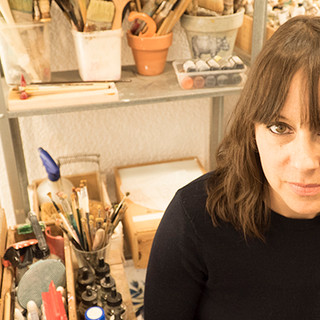
On imperfection, the passage of time, and the quiet beauty of being human.

Feathered Memory VI 
Dripping flowers 
Feathered Memory
We live in a world that constantly invites us to pursue perfection. Perfect faces, perfect bodies, perfect spaces, perfect lives. Beauty is often presented as something flawless, carefully arranged and untouched by time. Yet I have always been drawn to a different kind of beauty. One that is less obvious, more mysterious, and perhaps more deeply human.
I find beauty in what is fragile, imperfect, and fleeting. In the subtle gestures of a hand, the delicate curve of a flower beginning to fade, the expression of a face lost in thought. These quiet details carry something that perfection often cannot: a sense of life, of history, of something felt rather than simply seen.
Growing up surrounded by the influence of Italian art and culture, I developed an early fascination with Renaissance and Baroque painting. Beyond their extraordinary technical mastery, what continues to move me is their ability to reveal the complexity of human existence. The tension between light and darkness, strength and vulnerability, the physical and the spiritual.
These contrasts remain central to my own artistic practice.
In my paintings, the human figure often merges with elements of the natural world. Flowers emerge from bodies, animals become symbolic companions, and familiar forms dissolve into unexpected compositions. I am interested in that delicate space where the visible world begins to suggest something beyond itself.
Nature has always been an essential part of this exploration. It offers an endless reminder that beauty does not depend on permanence or symmetry. A flower is no less beautiful because its petals are falling. An ancient tree is no less magnificent because its branches have become twisted with age. On the contrary, these transformations give them character, depth, and individuality.
Perhaps we are not so different.
I believe that our imperfections, our experiences, and the marks left by time are part of what makes us extraordinary. They tell the stories of who we are, where we have been, and how we have changed.
Through painting, I try to give these ideas a visual language. Layers of color, texture, delicate lines, and unexpected details become ways of exploring the relationship between our inner and outer worlds. Sometimes an image emerges with clarity; other times, it remains deliberately ambiguous, allowing each viewer to discover something personal within it.
I am not interested in offering definitive answers. I prefer to leave space for curiosity, emotion, and interpretation.
For me, art is an invitation to look beyond appearances, to question what we consider beautiful, and to recognize the extraordinary within the ordinary.
Because perhaps beauty was never meant to be perfect.
Perhaps its greatest power lies in its ability to remind us of what it means to be alive.
And sometimes, the most beautiful things are those that refuse to be perfect.
.
.
.


Comments