Weightless

Weightless 
Weightless 
Weightless
There is a quiet misconception deeply rooted in the way we perceive ourselves and the world around us. We often associate wholeness with solidity, believing that to be complete we must remain defined, protected, and separate. We build identities, boundaries, and structures that help us navigate life, yet in doing so we sometimes forget that nature itself thrives through constant transformation. Nothing in the natural world remains fixed. Trees shed their leaves, rivers change their course, flowers bloom and fade, and even mountains are slowly reshaped by wind and time. Perhaps true harmony is not found in resisting this process, but in embracing it.
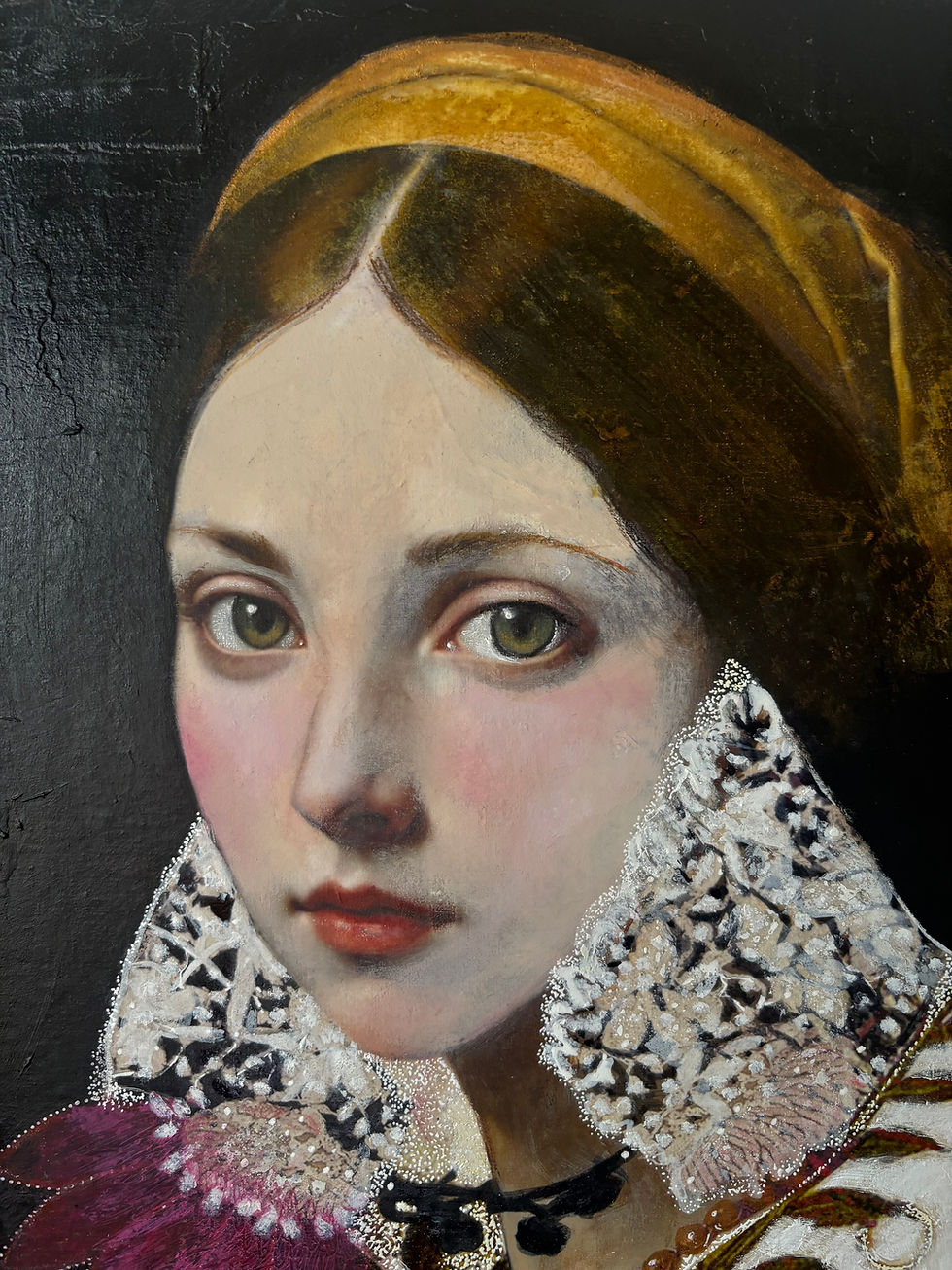
Weightless explores this idea through the image of a fragmented female figure whose body gradually dissolves into the surrounding landscape. At first glance, the missing portions of her form may suggest absence or loss. We are conditioned to see fragmentation as something broken, incomplete, or wounded. Yet this work proposes another possibility. What if the dissolving figure is not disappearing, but expanding? What if she is not losing herself, but becoming part of something infinitely larger?
The figure's transformation is an act of surrender rather than defeat. She releases the need to remain separate from the world around her and allows herself to merge with it. The boundaries between body, plant, air, and earth begin to soften until they are almost indistinguishable. In this state, she experiences a profound sense of freedom. No longer carrying the burden of control, expectation, or rigid definition, she becomes light. Weightless.
The vibrant reds and luminous pinks that dominate the composition play an essential role in this narrative. Red speaks of life itself—of blood, passion, vitality, and the pulse that connects us to every living creature. Pink introduces tenderness, compassion, and emotional openness. Together they create a visual dialogue between strength and softness, reminding us that vulnerability is not the opposite of power. In many ways, vulnerability is power. It is the courage to trust life enough to let go.
This painting also reflects a deeply personal belief that nature is not something external to us. Modern life often encourages us to see ourselves as separate observers of the natural world, standing apart from forests, oceans, animals, and seasons. Yet we are nature. The rhythms of our bodies mirror the rhythms of the earth. Our emotions ebb and flow like tides. Our growth follows cycles of expansion, rest, and renewal. When we remember this connection, many of the divisions we have created begin to dissolve.
The figure in Weightless embodies that remembrance. She does not vanish into nature; she returns to it. Her fragmented form becomes a metaphor for the layers of identity that can be released when we stop clinging so tightly to who we think we should be. In their place emerges something quieter, deeper, and more authentic—a sense of belonging that requires no effort to maintain.
Ultimately, Weightless is an invitation. It invites us to soften our edges, to trust the currents of life, and to reconsider what it means to be whole. It suggests that wholeness is not always found in holding ourselves together, but sometimes in allowing ourselves to dissolve into the beauty that surrounds us. In surrendering the illusion of separation, we discover that nothing is missing.
We discover that we have always belonged.
And in that moment, we become weightless.
.
.
.
#Weightless #ContemporaryArt #FigurativeArt #NatureInspiredArt #MixedMediaArt #FemaleFigure #NatureAndSoul #ArtCollectors #ContemporaryPainting #ModernArtCollector #NatureLover #FineArtPainting #EmotionalArt #PinkAndRed #ArtWithMeaning #LuxuryInteriors


Comments