The Secret Language of Colour

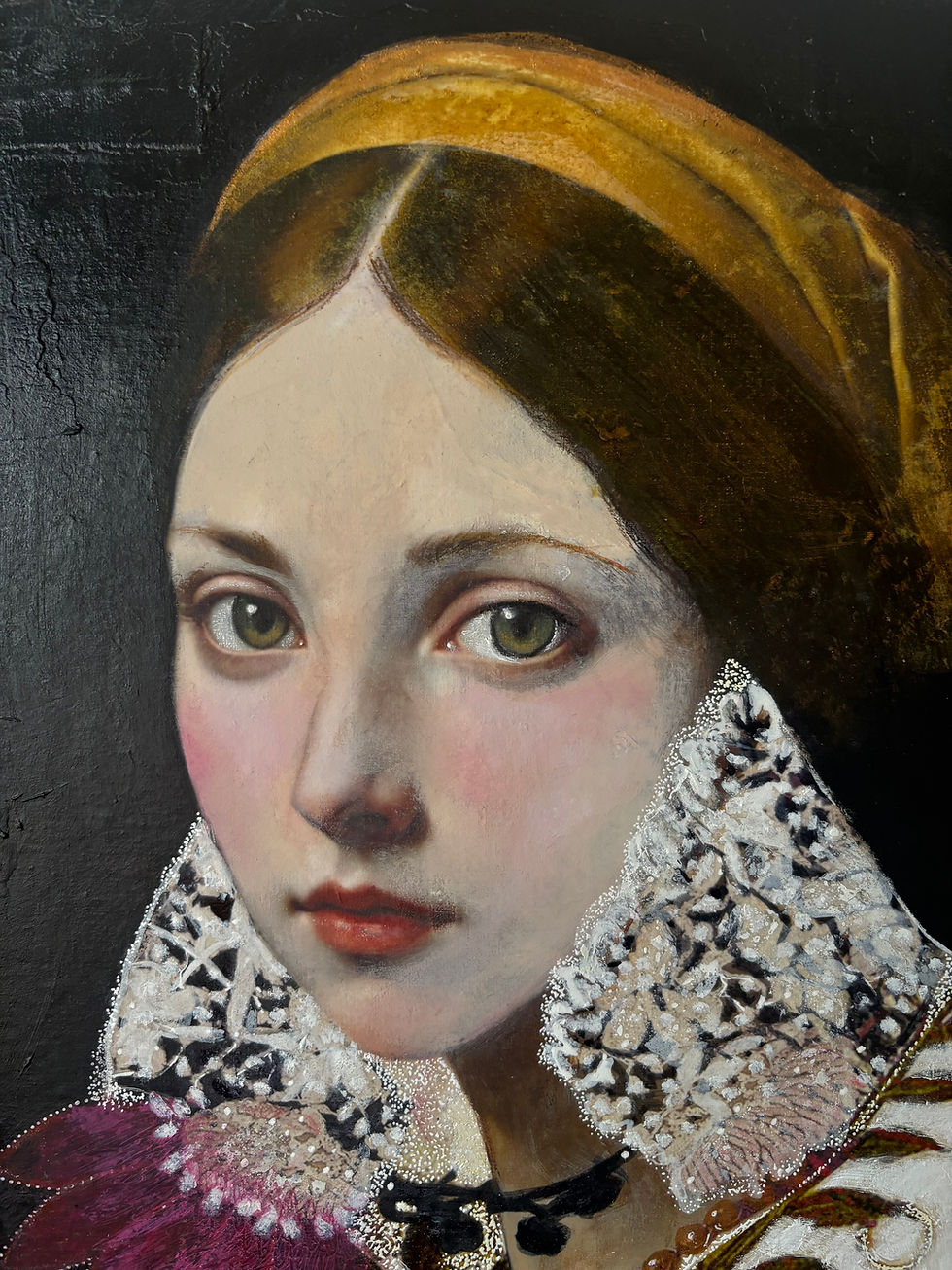
Series: Equestrian Elegance 
Series: Equestrian Elegance 
Series: Equestrian Elegance
Color is one of the most immediate ways we connect with a painting, yet its role reaches far beyond what we first perceive, this is not a secret.
It may seem self-evident that color is essential to art—after all, what is a painting without it?
And yet, the history of art itself gently challenges this assumption.
Think, for instance, of Lucio Fontana, the Italian artist who radically redefined the surface of painting. In his Concetti Spaziali, Fontana cut through the canvas, opening it rather than covering it with color.
These works were often monochromatic—pure white, deep red, or stark black—but their power did not rely on color alone. Instead, they invited space, light, and shadow to become part of the artwork. The gesture of the cut transformed the painting into something beyond image: a physical, almost metaphysical experience. And still, even in this reduction, color remained quietly present.
A white surface does not hold the same emotional weight as a red or a black one. The atmosphere shifts, subtly but undeniably.
This reminds us that color is not always the protagonist, but it is always shaping how we feel.
In painting, color holds the power to transform an image entirely. The same composition can evoke completely different responses depending on the palette chosen.
A delicate balance between tones, contrasts, and saturation determines whether a piece feels harmonious or unsettling.
When something feels “off” in an artwork, more often than not, it is not the subject or the composition—it is the relationship between colors that has not yet found its equilibrium.
Each color carries with it a psychological and emotional weight. Blue often brings a sense of calmness and introspection, like a quiet breath or an endless sky. Red pulses with energy, passion, and intensity—it can warm a space or overwhelm it. Yellow introduces light and vitality, while green connects us to nature, renewal, and balance. Purple leans toward mystery and introspection, and pink can evoke softness, tenderness, or nostalgia depending on its tone.
What becomes truly fascinating is not only what each color represents on its own, but how they interact. A forest painted in natural greens and soft yellows may bring a sense of serenity, grounding the viewer in something familiar and alive. It can elevate feelings of peace, growth, and quiet joy.
Yet when that same forest is reimagined in deep purples and vibrant pinks, something shifts. The scene becomes dreamlike, almost otherworldly. It no longer reflects reality—it transforms it. And in doing so, it can awaken hidden memories and emotions that are not tied to logic, but to something more instinctive and intimate.
This is where the quiet power of art reveals itself. Color allows us to move beyond representation and into sensation. It invites the viewer not just to see, but to feel, to remember, to connect.
This sensitivity to color extends far beyond the canvas and into our daily lives.
The spaces we inhabit are deeply influenced by color, often in ways we do not consciously register.
The tones we choose for our homes shape our moods, our energy, and even our sense of comfort.
A space filled with soft, balanced hues can feel like a sanctuary—a place where the nervous system can settle, where we can reconnect with ourselves.
Art plays a fundamental role in this environment. A painting is not just an object placed on a wall; it becomes part of the emotional architecture of a space. The colors within it can either harmonize with the surroundings or introduce a deliberate contrast that brings life and movement into the room.
Our homes are not meant to be places where we hide from the outside world, but spaces where we restore ourselves. Like a battery that needs to be recharged, we need environments that support us, that bring calm, clarity, and a sense of belonging.
Understanding color, both in art and in life, is about learning to notice its subtle influence. It is about recognizing how it shifts our perception, how it shapes our inner state, and how, when used with intention, it can transform not only a painting, but the way we experience the world around us.
.
.
.


Comments